Buckwheat
(Fagopyrum esculentum)
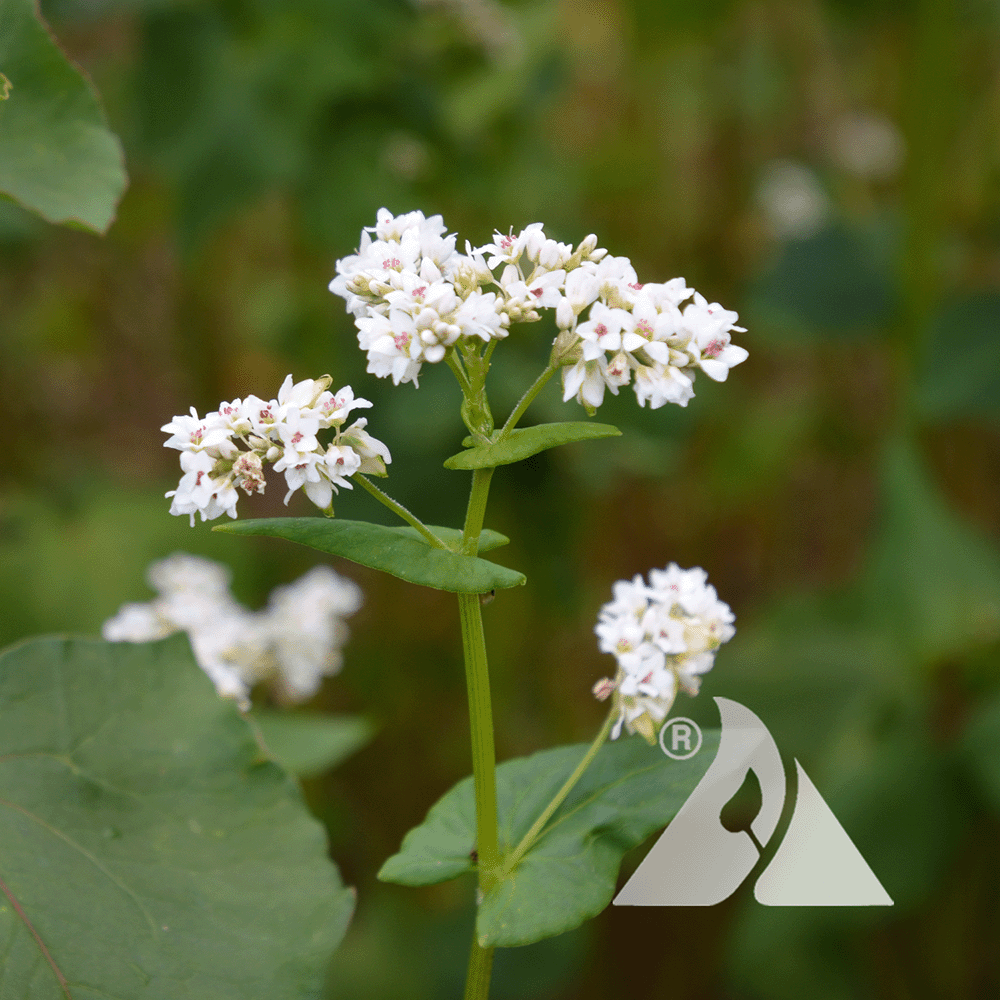
Buckwheat, native to northern Asia, is a valuable cover crop to improve soil tilth, increase available phosphorus and suppress weeds. Ornamental as well, the profuse white blooms atop unique heart-shaped leaves and red stems. One can always tell when buckwheat is nearby from the hum of a variety of pollinators and beneficial insects that are attracted to their abundant nectar reserves. Beneficial insects for ecological pest control include ladybeetles, parasitic wasps, minute pirate bugs, tachinid flies, and hoverflies. Wildlife observed browsing on buckwheat seeds are wild turkeys, pheasants, quail, deer and songbirds. Having the potential to both suppress root pathogens and act as a nitrogen scavenger, buckwheat absorbs excess nitrates within the soil that could otherwise be lost to leaching or runoff, then sequesters them within the leaves to later be released after termination for use by future plantings. This differs from nitrogen fixation as it does not add additional nitrogen but instead helps in preventing the loss. This cover crop can be planted after danger of last frost has passed from spring to late summer. Make note that it may wilt in heat. Seeds develop quickly; terminate within 10 days of blooming if you do not want it to re-seed. Termination methods include mowing, tilling, or freeze.
Note that all vegetative material of Buckwheat is toxic to horses, cattle, sheep, dogs, and other animals.
 Call Us Today! (303) 431-7333